Tag: Wānaka

  • A case for organisations running their own ActivityPub servers

    A case for organisations running their own ActivityPub servers

    The internet has always been about standards, otherwise it simply would not work. The visibility of these for the average user has diminished as large platforms have monopolised activities on the web and run them with their own invisible data structures.

    Now the internet is the main form of communication there is a growing acknowledgement that organisations pushing updates to the internet need to do it in an open and and ideally internationally standardised format that allows it to disseminate easily and widely.

    Standardising Public Information Publishing

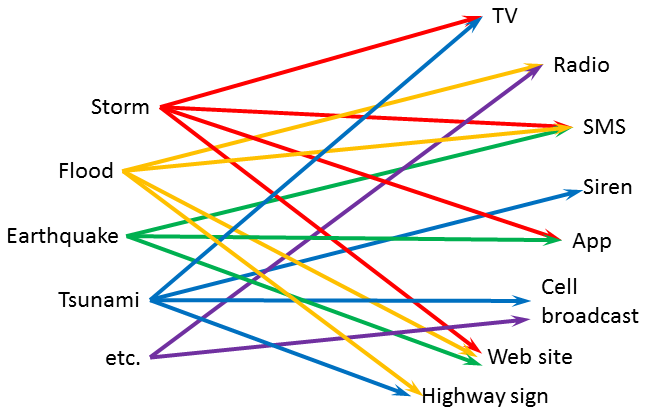
    An example of this is the Common Alerting Protocol (CAP) that the NZ Metservice has implemented as a way of publishing their weather alerts, their reasons are well documented here but basically boil down to their reasons copied here:

    • CAP has a defined standard. This means there is consistency in how it is implemented in different countries, making it easier for developers to use
    • A single message can deliver consistent hazard information to multiple systems or end points thus enhancing warning effectiveness
    • CAP alerts can be geographically targeted to a defined warning area
    • CAP is a rich format capable of including maps, images, video and audio for improved accessibility
    • CAP can also support multiple languages

    Our local Council the Queenstown Lakes DIstrict Council (QLDC) is an example of an entity similar to the Metservice in that it has important information that needs to be published to a wide population all using different platforms and tools. For example:

    • Roading alerts
    • Local Emergencies
    • Swimming pool and Library service updates

    The QLDC currently publishes these to Facebook and on their website which limits their easy dissemination to those two platforms and developers willing to write non-standard code to scrape the data into other systems.

    This information could easily be published using the ActivityPub Protocol and set free for users to manage their own interactions with and developers to pull into their platforms in standard ways.

    Should an entity run it’s own presence much like they run their own website or email?

    A major question is if the QLDC should simply make accounts on an existing Fediverse server, like they have on Facebook, or should stand up their own server that they have complete control over. We contend that the latter is the appropriate solution:

    • Easily and cheaply segment information by running multiple accounts with recognisable handles:
      [email protected]
      [email protected]
      – …
    • Aggregator handles could auto repost groups of handles i.e. [email protected] would repost the pool, library, roading etc alerts in that area
    • Publishing can be done from a web app signed into multiple accounts or automated from existing systems with established code libraries
    • The software (i.e. gotosocial, snac) can be locked down to reduce security concerns
    • Posts can be edited and deleted and either welcome public comment or have it filtered or disabled

    Possible disadvantages

    • Cost
      While the upfront cost of Facebook is free its cost to society and reliability as a civic actor is not stable. To run a dedicated presence would cost $500 – $1500nzd a year which does not seem much for wrestling back control of dissemination and making it easier for constituents to access public information
    • Complexity
      It is a new thing to learn for the people managing the publishing. But it is in a known format, people are used to Social Media, and once people are onboard they find it refreshingly simple. No boosting, ads, gatekeepers.


    Fediverse Reactions
  • WordPress self hosted versus wordpress.com

    WordPress self hosted versus wordpress.com

    We haven’t used any AI for any of the writing in this blog. I mean writing is fun so why take short cuts.

    For a question as important as this though I imagine people will search for themselves. So instead of trying to convince anybody with our own biased thoughts here are some hopefully less biased thoughts from Claude:

    Complete Control & Ownership

    • Full ownership of your website, content, and data
    • No risk of platform shutdowns or policy changes affecting your site
    • Complete control over your domain and hosting environment
    • Can’t be suspended or banned by a third-party platform

    Unlimited Customization

    • Install any theme or plugin – no restrictions on what you can use
    • Full access to edit PHP, CSS, HTML, and all code
    • Create custom functionality and modifications
    • No limitations on design or feature implementation

    Better Performance & SEO

    • Choose optimized hosting tailored to your needs
    • Implement advanced caching and CDN solutions
    • Full control over site speed optimization
    • Better SEO capabilities with unrestricted plugin access
    • No forced branding or ads from hosting platforms

    Monetization Freedom

    • No revenue sharing – keep 100% of your earnings
    • Run any type of ads or affiliate programs
    • Sell products/services without platform fees
    • No restrictions on e-commerce functionality

    Professional Features

    • Advanced backup and security solutions
    • Multiple staging environments for testing
    • Integration with any third-party services or APIs

    Cost Effectiveness (Long-term)

    • Often cheaper than premium hosted solutions as you scale
    • No per-user fees or transaction costs
    • Choose hosting that fits your budget and needs
    • Bulk pricing advantages for multiple sites

    Developer-Friendly

    • Full database access for migrations and development
    • Git integration and version control
    • Custom development environments
    • No restrictions on server-side functionality

    Privacy & Security

    • No forced data sharing with platform providers

    Complete data control

    • Implement your own security measures
    • GDPR/privacy compliance on your terms

    Fediverse Reactions
  • Wānaka WordPress Course

    Wānaka WordPress Course

    It is hard for small organisations, especially non-for-profits to not succumb to skipping to different technology instead of investing in learning and supporting existing.

    We have seen this with WordPress, a organisation has a site built with it, decides change is necessary and is wooed away by a designer who is more at home in SquareSpace or Wix. Often they realise the move results in more expense and even more investment in learning a whole new system, especially when the next designer requires yet another move.

    WordPress is not ideal, but it is a whole lot better than people think once you get to know it. It is also often cheaper and is definitely more aligned ethically and geographically if hosted locally with small organisation s who “Just want a web presence”.

    To help locally we are going to run a course on how to build a basic site and grow skills in WP, the Block Editor is now good enough IMHO that it is worth the learning curve.

    Here is our proposed course outline:

    • How websites and domain names are related
    • Where websites live and how basic costs
    • What is WordPress and why it is cool
    • Create a site and what is in the main toolbar
    • Creating your first page!
    • Different content types and why they exist
    • Create your first Post!
    • Themes and strategy around how to manage them
    • How a website can drive your social media while retaining your control and content ownership (publish once, propagate widely)
    • Plugins and extending from the basics